Anion Gap Calculator: Patient Overview to Lab Results
About the anion gap
The anion gap is a measurement computed from common electrolytes in your blood. It may reveal whether there might be an issue with your body’s acid-base balance. Many people first see it on a blood chemistry panel or a basic metabolic panel, then question what the number means.
In simple terms, the anion gap is a diagnostic clue, not a diagnosis by itself. It can help a healthcare provider identify an underlying cause of abnormal lab results, especially when there is concern about a metabolic disorder or an electrolyte imbalance.
Most often, the anion gap is used in patient education and lab interpretation to better understand blood test results. It is an element of a larger picture that includes symptoms, other laboratory values, and your overall health.
The calculation usually uses sodium, chloride, and bicarbonate, which are part of your serum electrolytes or electrolyte panel. These values help clinicians determine whether the body may be accumulating acids or lacking important buffering substances.
In what way an anion gap calculator works
A Anion Gap Calculator relies on a straightforward anion gap formula derived from the values from your lab report. This most widely used version is:
Anion gap = sodium - (chloride + bicarbonate)
That formula measures the positively charged and negatively charged particles in your blood. Although the actual chemistry is more complex, this calculation offers a practical estimate used in interpreting results.
For example, if sodium is 140, chloride is 104, and bicarbonate is 24, the calculation would be:
140 - (104 + 24) = 12
That number may fall within the expected normal laboratory values depending on the lab’s reference range. The calculator is useful because it lets patients to quickly calculate anion gap from a routine blood test.
The result can be helpful, but it should always be viewed with the rest of the lab results. A single number is only one piece of medical evaluation, and the meaning depends on the full clinical picture.
Standard anion gap values and what they mean
A typical range for the anion gap can change from one lab to another. That is why your report may list a specific normal range. Some labs use a smaller or higher range depending on the testing method and how they measure electrolytes.
This is one reason it is important to compare your result with the lab-normal range printed on the report rather than assuming one number is right for everyone. An anion gap that looks increased on one report may be normal on another.
Albumin also is important. Because albumin bears a negative charge, lower albumin levels can make the anion gap appear reduced than expected. This is why the result may need to be considered alongside protein status and other chemistry values.
In patient education, it helps to remember that a normal result does not always eliminate a problem, and an abnormal result does not always signal something serious. It simply tells your healthcare provider whether more context or follow-up testing may be needed.
What a high anion gap may suggest
A high anion gap may be a clue that extra acids could be building up in the body, which might point toward metabolic acidosis. This serves as a broad term for a condition in which the blood becomes more acidic than normal.
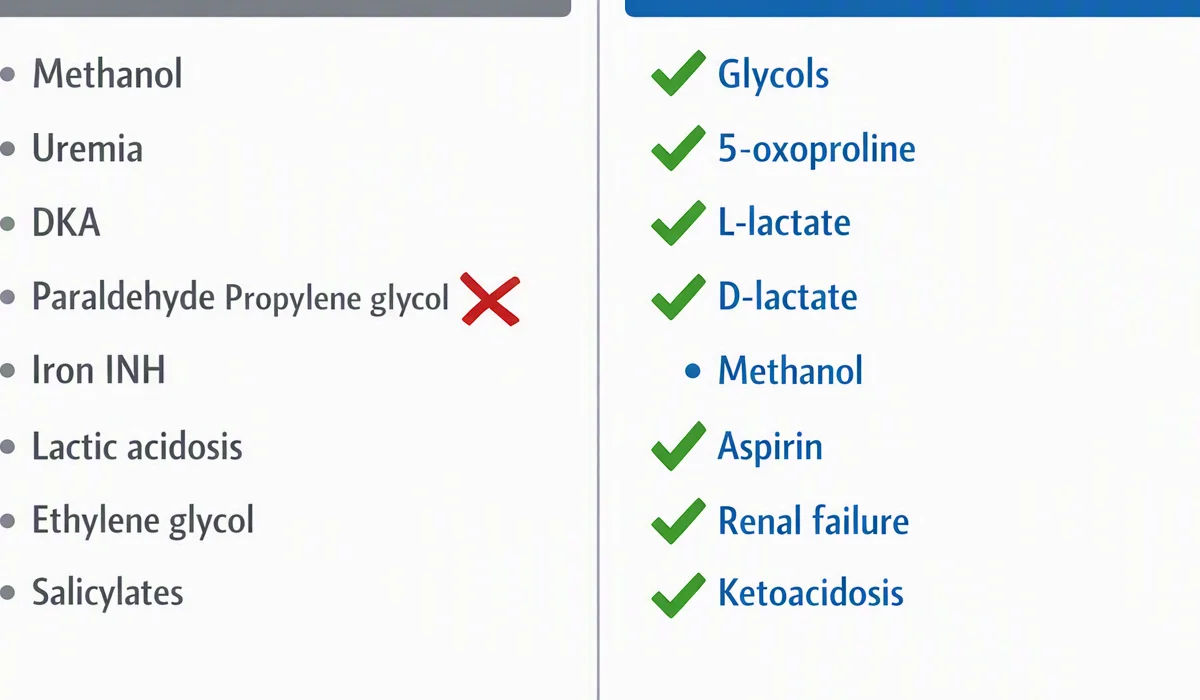
Some common causes include lactic acidosis, ketoacidosis, and kidney disease. These conditions change how the body makes, handles, or removes acids. A high result does not identify the exact cause, but it can help narrow the possibilities.
Lactic acidosis may happen when the body does not get enough oxygen or when there is a serious illness affecting tissue metabolism. Ketoacidosis can occur when the body breaks down fat for fuel and produces ketones, which are acidic. Kidney disease can reduce the body’s ability to eliminate acids, leading to abnormal chemistry values.
A high result is most useful as a diagnostic clue when combined with symptoms, history, and other blood work. It is one reason abnormal lab results often lead to follow-up testing or a closer look at the possible underlying cause.
Understanding a low anion gap might mean
This low anion gap is uncommon, but it can still be worth noting. One frequent explanation is hypoalbuminemia, which means having a below-normal level of albumin in the blood.
When albumin is low, the anion gap may appear reduced because there are fewer negatively charged proteins influencing the calculation. In some situations, unusual proteins in the blood may affect the result. A condition that can be linked to a low anion gap is multiple myeloma, a disease that can elevate certain proteins and shift blood chemistry.
This result does not automatically mean a serious illness. In some cases it is due to lab variation, measurement differences, or another factor that can be clarified with repeat testing. That is why a healthcare provider may review the complete electrolyte panel and other findings before deciding how to interpret it.
If you see a low value on your report, the best next step is usually to ask how it fits with your other blood test results and whether additional evaluation is needed.
How protein affects the reading
Albumin correction is an key step when interpreting the anion gap in people with decreased protein levels. Because albumin assists influence the distribution of charged particles in the blood, the raw number may miss the true gap when albumin is low.
This is where the albumin-corrected anion gap applies. A corrected value revises the result so it better shows the likely acid load when albumin is below normal. In other words, the number is corrected for albumin to support interpretation.
This step matters because protein levels can shift the meaning of the result. Without this context, a patient might think the anion gap is typical or low when the corrected value suggests a another picture.
Not every lab report includes a corrected value, and not all result needs one. Still, if albumin is low, asking about albumin correction can help make the laboratory interpretation more reliable and informative for patient education.
How to read your test report safely
Reading lab results on your own can be informative, but it is necessary to do it thoughtfully. Look at the anion gap alongside the sodium, chloride, bicarbonate, albumin, and any notes from the lab. All of these results work together, and small changes in one can affect the others.
Pay attention to the report lists a reference range or corrected anion gap for hypoalbuminemia normal range. These ranges may differ between labs and may change based on the testing method. A result outside the printed range does not always mean there is a problem, but it does mean the value deserves interpretation.
If you notice an electrolyte imbalance, try not to guess the cause. The anion gap can be affected by many factors, and the same number may be seen in different conditions. A healthcare provider can explain whether the pattern fits a temporary issue, a chronic condition, or a result that should be repeated.
For safe interpretation, use the report as a starting point, not a final answer. A talk with your healthcare provider is often the best way to understand what the numbers mean for your health.
When to seek medical care
Some abnormal anion gap anion gap in chronic kidney disease findings are identified during regular testing and do not require emergency action. However, certain symptoms should never be ignored, especially if they appear along with abnormal lab values.
Obtain emergency care right away if you have shortness of breath, severe weakness, chest pain, marked drowsiness, fainting, or worsening confusion. These may suggest a serious problem that needs immediate attention.
Contact your healthcare provider without delay if you have ongoing vomiting, dehydration, uncontrolled diabetes, swelling, decreased urine output, or other signs that could point to a metabolic or kidney-related issue. These symptoms may suggest a condition that needs medical evaluation and possibly follow-up testing.
The key point is that the anion gap is a clue, not a diagnosis. If your result is abnormal and you feel unwell, seek care rather than waiting for the number to improve on its own.
FAQ about anion gap calculations
What is an anion gap calculator used for?
An Anion Gap Calculator helps determine the anion gap from a blood test by using sodium, chloride, and bicarbonate values. It is used for patient education and lab interpretation, especially when a clinician is looking for a possible metabolic disorder or electrolyte imbalance. It does not diagnose a condition on its own.
What is a normal anion gap range?
The normal range depends on the lab and the testing method, so the best number to use is the reference range printed on your report. Some labs list a slightly different range than others. Your healthcare provider can clarify whether your result is truly out of range for that specific test.
Why is albumin important when interpreting the anion gap?
Albumin affects the result because it is a negatively charged protein in the blood. If albumin is low, the anion gap may look falsely low. That is why clinicians may consider an albumin-corrected anion gap to make the result more accurate and more useful for interpreting results.
Can a high anion gap mean something serious?
Certainly, a high anion gap can occasionally indicate a serious condition such as metabolic acidosis, lactic acidosis, ketoacidosis, or kidney disease. Even so, the number alone does not show the cause or severity. It is a indicator that should be reviewed with a medical professional.
Should I contact a healthcare provider about an abnormal result?
Yes, you should discuss abnormal lab results with a healthcare provider, especially if you have symptoms or if other values on the blood test are also abnormal. They can help determine whether the result is likely to be temporary, whether it matches a known condition such as hypoalbuminemia or multiple myeloma, and whether more testing or medical advice is needed.