How to Understand the Anion Gap in Blood Gas Findings
What exactly is the Anion Gap?
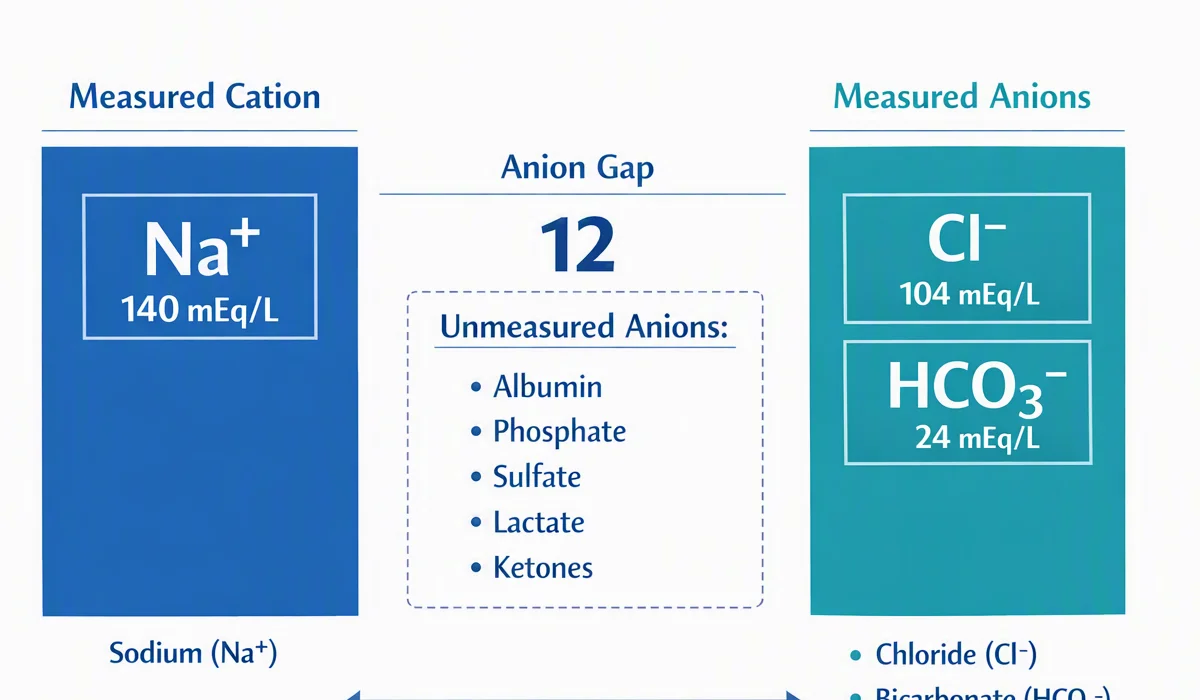
The anion gap is a derived measurement that helps clinicians interpret electrolytes in the context of acid-base disorders. It compares the measured positive ions, mainly sodium, with the measured negative ions, especially chloride and bicarbonate, to determine the amount of unmeasured anions in the blood.
In basic terms, the anion gap is a diagnostic clue that helps uncover whether an acid load is present. Because many important acids are not directly measured on a standard electrolyte panel, the anion gap is helpful in spotting hidden metabolic derangement and narrowing the differential diagnosis during blood chemistry review.
The core idea comes from serum electrolytes: if the amount of sodium is much higher than the combined chloride and bicarbonate values, the difference suggests other negatively charged particles. Those particles may include lactate, ketones, or retained acids in kidney disease. This is why the anion gap is closely tied to clinical interpretation of acid-base disorders.
While the exact formula can vary slightly, the concept remains the same. The gap is derived from laboratory values, and the result must always be read in context rather than in isolation. A normal number does not automatically mean everything is fine, and an abnormal value does not identify the cause by itself.
In what way an Anion Gap Calculator Functions
An anion gap calculator uses values from a serum chemistry panel to determine the gap rapidly and uniformly. Most calculators apply sodium, chloride, and bicarbonate. Some also include potassium, although potassium is often excluded in routine clinical practice because its concentration is relatively small compared with sodium.
The common standard equation is:
Anion gap = sodium − (chloride + bicarbonate)
If potassium is included, the equation becomes slightly different, but the interpretation usually changes very little. The calculator helps standardize the math, but the real value lies in how the result fits the broader acid-base picture.
For example, imagine a patient with sodium 140, chloride 104, and bicarbonate 20. The anion gap would be 16. Depending on the lab’s reference range, that may be mildly elevated. The calculator does not stop at a number; it prepares the next step in analysis, which is determining whether this is evidence of metabolic acidosis or another acid-base disorder.
Modern tools may also support anion gap correction, especially when albumin is abnormal. That matters because the gap can appear lower than it truly is when circulating protein levels are reduced. An albumin-adjusted anion gap can provide a more accurate calculation of the underlying acid burden.
How the Anion Gap Is Reflected in Blood Gas Interpretation
The anion gap is particularly valuable when paired with blood gas results, especially an arterial blood gas. A blood gas provides the pH, carbon dioxide, and bicarbonate context needed for full acid-base balance assessment. The anion gap then https://anion-gap-results764.iamarrows.com/anion-gap-calculator-how-the-equation-works-and-what-results-mean helps classify the metabolic component of the disorder.
Here is the general workflow in blood gas analysis:
- Check the pH to determine whether acidemia or alkalemia is present.
- Assess bicarbonate and carbon dioxide to decide whether the primary problem is metabolic or respiratory.
- Calculate the anion gap from serum electrolytes.
- Use the result to identify whether the metabolic disorder is high-gap or normal-gap.
- Look for respiratory compensation or a mixed disorder.
For example, a low pH with low bicarbonate and a high anion gap strongly suggests high-gap metabolic acidosis. If the pH is near normal but the bicarbonate is low, there may be compensation or a combined process. This is where the anion gap improves interpret results skill by showing whether hidden acids are contributing.
Blood gas interpretation should always connect serum bicarbonate from chemistry with the bicarbonate estimate on the gas. Discrepancies may reflect timing differences, method differences, or a true shift in the patient’s condition. In practice, the anion gap becomes part of a larger acid-base reasoning pathway rather than a standalone metric.
Typical, Elevated, and Low Anion Gap: Their Meaning
The meaning of the anion gap depends on the lab’s reference range, which can vary from one analyzer to another. However, the patterns are consistent. A normal anion gap usually means there is no large buildup of unmeasured acids. A high anion gap suggests extra acids are present. A low anion gap is less common but can also be clinically important.
A normal result does not exclude an acid-base disorder. It may indicate normal anion gap metabolic acidosis, especially if bicarbonate is low and chloride is elevated. That pattern is often called hyperchloremic acidosis. On the other hand, a high result points toward high anion gap metabolic acidosis, where unmeasured acids increase the gap.
A low anion gap may reflect hypoalbuminemia, lab artifact, or unusual positively charged proteins. It should not be ignored, but it is usually less common than high-gap abnormalities. When a low value appears, the first step is often to repeat the test and review the full electrolyte pattern.
As reference ranges differ from lab to lab, the best approach is to compare the patient’s result with the specific local range rather than relying on a universal cutoff. That is especially important when monitoring serial results over time.
High Anion Gap Metabolic Acidosis: Frequent Causes
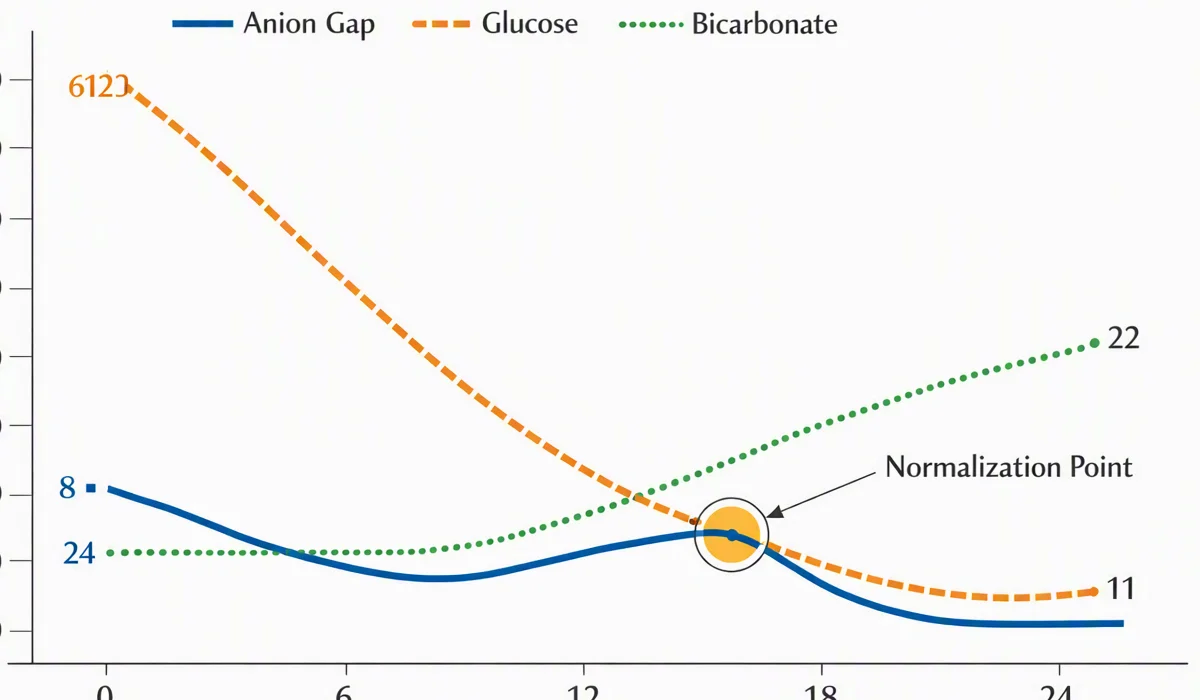
High anion gap metabolic acidosis happens when unmeasured acids accumulate at a faster rate than the body can buffer or remove them. The consequence is a reduced bicarbonate concentration and a widened gap. This laboratory pattern is one of the most useful applications of an anion gap calculator because it can quickly direct the differential diagnosis.
Common causes include lactic acidosis, ketoacidosis, and uremia. In lactic acidosis, lactate accumulates because of reduced blood flow, low oxygen levels, fits, severe infection, or other causes of impaired oxygen use. In ketoacidosis, ketone bodies such as beta-hydroxybutyrate serve as unmeasured anions. Uremia represents retained acids in advanced kidney dysfunction.
Other causes may include toxins, medication effects, and severe metabolic stress, but the main three in everyday practice are often lactic acidosis, ketoacidosis, and uremia. Each creates a different clinical context, but all can produce the same core laboratory pattern: low bicarbonate, acidemia, and an increased anion gap.
When reviewing the pattern, consider what kind of acid is being produced or retained. Is the patient in shock with rising lactate? Is there uncontrolled diabetes with ketosis? Is kidney function declining with acid retention? These questions turn the anion gap from a number into a useful tool for clinical interpretation.
Typical Anion Gap Metabolic Acid-Base Imbalance and Overlapping Disorders
Normal anion gap metabolic acidosis, also known as non-anion gap metabolic acidosis, happens when bicarbonate drops and chloride goes up to replace it. The total gap stays within range because the loss of bicarbonate is offset by an increase in measured anions, especially chloride. This is sometimes described as a chloride shift.
Common causes include diarrhea and renal tubular acidosis. Diarrhea leads to gastrointestinal bicarbonate loss, while renal tubular acidosis prevents the kidneys from properly handling acid and bicarbonate. In both cases, the key clue is low bicarbonate with a normal gap and often a higher chloride concentration.
Mixed acid-base disorders are also common. A patient may have one process causing a high gap and another causing a normal gap at the same time. For example, diarrhea and lactic acidosis may coexist, or renal failure may overlap with vomiting and respiratory compensation. This is why the anion gap should always be evaluated with pH, bicarbonate, and carbon dioxide rather than in isolation.
A mixed acid-base disorder can hide the severity of disease. A patient may appear to have a modest bicarbonate change, but the anion gap reveals a second problem. In these cases, the gap is a valuable diagnostic clue that helps uncover the full acid burden.
In What Way Does Affects the Anion Gap
Albumin is a major negatively charged protein in blood and one of the most important unmeasured anions. When albumin falls, the measured anion gap can fall even if the true acid burden is present. This is why hypoalbuminemia can obscure a clinically important gap.

The solution is anion gap correction, often called an albumin-adjusted anion gap. Correcting for low albumin helps reestablish the expected value and can reveal a hidden high-gap disorder. This matters in critically ill patients, where low albumin is common and acid-base disorders are frequent.
In practical terms, if albumin is low, a “normal” gap may actually be abnormal after correction. That means a patient with sepsis, kidney injury, or other systemic illness could have a hidden high-gap process that would be missed if albumin is ignored. Correcting the gap enhances diagnostic accuracy and supports better interpretation.
Whenever albumin is available, it should be assessed alongside the serum electrolytes and blood gas. The corrected value can change management by revealing a clearer acid-base picture.
Common Pitfalls While Reading an Anion Gap
A number of problems can result in incorrect interpretation. One of the most common is lab error. Sample contamination, analyzer issues, or timing differences between the chemistry panel and blood gas can all distort the calculation. If the result does not fit the clinical picture, repeat testing may be required.
A further mistake is overreliance on a single threshold. Because the reference range varies by laboratory, a value that seems normal in one setting may be mildly elevated in another. Regularly compare the result to the local range and to prior measurements if accessible.
The delta gap is another important concept. It compares the rise in anion gap with the fall in bicarbonate and helps identify whether there is a mixed disorder. If the rise in gap is much larger or smaller than expected, another acid-base process may be present. This is especially valuable when evaluating complex patients with multiple concurrent illnesses.
Finally, remember that the anion gap reflects only the balance of measured ions versus unmeasured anions. It does not identify the exact cause on its own. Proper interpretation requires the full clinical context, the arterial blood gas, the chemistry panel, and the pattern of serum electrolytes.
FAQ
What does a high anion gap mean in blood gas results?
A high anion gap in blood gas results usually means there are extra unmeasured anions in the blood, which points toward metabolic acidosis. Common causes include lactic acidosis, ketoacidosis, and uremia. The result should be interpreted with pH, bicarbonate, and the clinical picture.
Can a normal anion gap rule out metabolic acidosis?
No. A normal gap does not rule out metabolic acidosis. It may indicate normal anion gap metabolic acidosis, such as from diarrhea or renal tubular acidosis. The pH, bicarbonate, and chloride levels are essential for full interpretation.
What causes low albumin affect the anion gap?
Albumin is a major negatively charged protein. When hypoalbuminemia is present, the measured anion gap may be inaccurately low. This is why anion gap correction can be important for proper clinical interpretation.
How do you read the anion gap with bicarbonate and pH?
Initially, look at pH to determine whether the patient is acidemic or alkalemic. Next check bicarbonate: if it is low, a metabolic cause is likely. A high anion gap with low bicarbonate suggests high-gap metabolic acidosis, while a normal gap with low bicarbonate suggests non-anion gap metabolic acidosis. Blood gas interpretation also requires checking for respiratory compensation.
What can cause a low anion gap?
A low anion gap is most often related to hypoalbuminemia, but it can also occur with lab error or unusual blood chemistry patterns involving proteins or electrolytes. If the value is unexpectedly low, recheck the test and review the full set of laboratory values before concluding.